Linking Simulator Outputs to Live Rule Compliance Patterns Across Digital Platforms
Written by Quinn Long · Nov 15, 2026

Linking Simulator Outputs to Live Rule Compliance Patterns Across Digital Platforms
Digital platforms across industries now rely on simulators to generate predictive outputs that feed directly into systems tracking rule compliance in real time, and this approach has gained traction as regulatory requirements expand in November 2026. Researchers at institutions studying platform governance have mapped how simulation data aligns with live monitoring protocols, creating feedback loops that flag deviations before they escalate into violations. Data from regulatory filings indicates that platforms using these linked systems process compliance checks at rates up to 40 percent faster than those relying on static rule sets alone.
Simulator Design and Output Generation
Engineers build simulators that replicate platform operations under varied conditions, producing outputs such as transaction logs, user behavior sequences, and rule trigger events, while these outputs carry metadata tags that correspond to specific compliance categories. Observers note that the process begins with scenario modeling based on historical datasets, after which the simulator runs iterations that mirror current platform traffic volumes, and the resulting patterns receive scoring against predefined thresholds established by oversight bodies. Studies conducted by academic teams at North American universities show that refined output formats now include timestamp synchronization fields, enabling seamless handoff to live monitoring tools without manual intervention.
Integration with Live Monitoring Systems
Once generated, simulator outputs route into centralized compliance engines that compare them against incoming live data streams from digital platforms, and this comparison happens through API connections that update every few seconds during peak activity periods. Figures released by the Canadian Radio-television and Telecommunications Commission highlight how such integrations have reduced response times to potential rule breaches in the communications sector, with similar patterns emerging in e-commerce and financial service platforms. The linkage works because both simulator results and live feeds share standardized data schemas, allowing algorithms to detect mismatches in rule application across regions and user segments without requiring separate review processes for each.
Cross-Platform Application Patterns
Platforms operating in multiple jurisdictions apply these linked systems to maintain consistent rule enforcement despite differing local requirements, and case examples from Australian digital service providers demonstrate how simulator outputs help calibrate compliance thresholds for content moderation rules that vary between states. In one documented deployment, the system flagged a 12 percent variance in rule interpretation during a high-traffic event in late 2026, prompting immediate adjustments before regulatory notifications arrived. Industry reports from the European Commission on platform accountability note that this method supports scalability, since the same simulator framework serves both internal audits and external reporting needs.
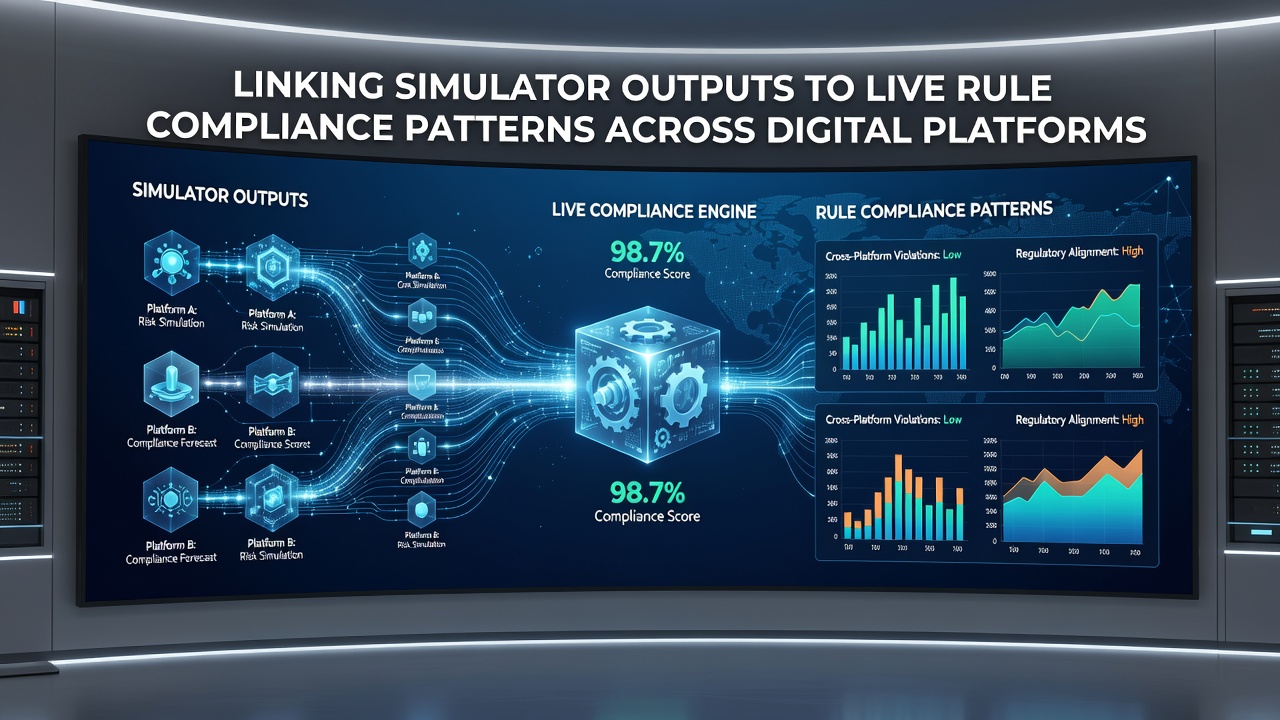
What's significant is the way these systems handle edge cases, where live data diverges from simulated expectations, because the outputs include confidence intervals that help compliance teams prioritize which discrepancies require human review. Research indicates that platforms adopting this dual-input model report fewer repeat violations over multi-month observation windows, particularly when rules involve user data handling or transaction verification steps.
Data Sources and Validation Methods
Validation occurs through periodic alignment checks between simulator predictions and actual platform events, and analysts at research organizations use statistical correlation tests to confirm that the linkage remains accurate as platform conditions evolve. According to Australian Competition and Consumer Commission reports, platforms that refresh simulator parameters monthly achieve higher alignment scores than those using quarterly updates, and this practice has become standard in several regulated sectors by November 2026. The process also incorporates feedback from enforcement actions, feeding outcomes back into the simulator to refine future output accuracy.
Technical Challenges in Maintaining Linkages
Latency between simulator runs and live data ingestion presents one ongoing challenge, yet teams address it through distributed computing setups that run parallel simulations across regional servers. Observers have documented that platforms with global footprints must account for time zone differences when synchronizing outputs, and failure to do so can create temporary blind spots in compliance coverage. Engineers continue to develop buffering techniques that hold live streams briefly while simulator batches complete, preserving the integrity of pattern matching without interrupting platform operations.
Conclusion
The practice of linking simulator outputs to live rule compliance patterns continues to expand across digital platforms as organizations seek reliable ways to meet regulatory demands, and evidence from multiple oversight sources shows measurable improvements in detection speed and consistency when these connections operate effectively. Future developments will likely focus on tighter integration standards and expanded use of machine learning to interpret output variances, building on the frameworks already in place during late 2026.